According to reports from Alphaliner the Coronavirus renders nearly 9% of container shipping fleets inactive. The global fleet is 23,676,000 TEU, which means 2,130,840 TEU are inactive.
The Ports of Los Angeles and Long Beach are facing 56 canceled sailings over the first three months of the year, the ports told. The Port of Oakland is expecting 23 blank sailings for February through March, a spokesperson said.
The Coronavirus crises has seen the headcount of unemployed vessels increase day by day as services are closed. In terms of 'inactive capacity', the ship idling is now worse than in the 2009 and 2016 crisis years. Keep in mind though, that these are absolute numbers - the global fleet has also grown very significantly since 2009.
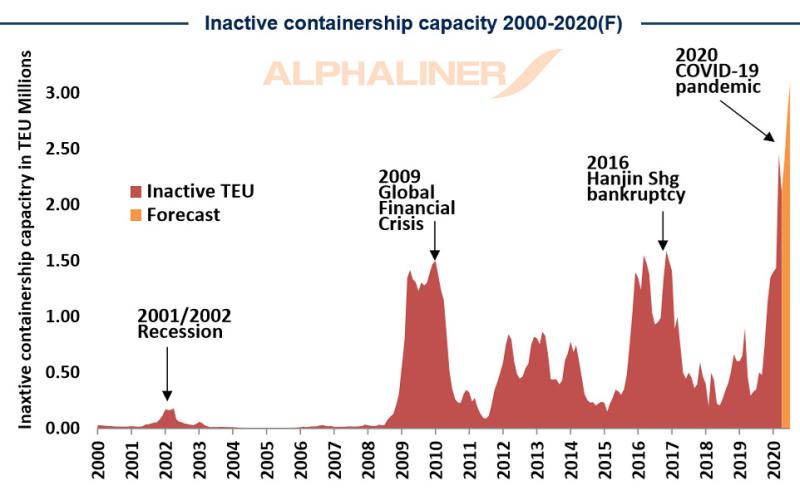
Graphic by Alphaliner
What does it mean for Marine Pilots?
Fewer vessels in voyage mean less pilotage and this means less income for many Pilots. Not every Pilot is an employee and many pilots are self-employed and organised in a brotherhood per example. They are earning only money if they are piloting a vessel. No vessel – no money. So they feel the financial impact of the corona crisis directly in their wallet.
One Brotherhood in Germany reports that the number of piloted vessels has decreased to 20% of the normal volume, because a big manufacturer has closed his factory near the harbour. They have never had a situation like that before - in decades. Canal Pilots are losing pilotages because the vessels accept longer distances in order not to take the risk of onboarding a stranger like a Maritime Pilot.
No Pilot could imagine this before.
A thank you to Jan Tiedemann and Alphaliner for counts, graphic and support.
The Ports of Los Angeles and Long Beach are facing 56 canceled sailings over the first three months of the year, the ports told. The Port of Oakland is expecting 23 blank sailings for February through March, a spokesperson said.
The Coronavirus crises has seen the headcount of unemployed vessels increase day by day as services are closed. In terms of 'inactive capacity', the ship idling is now worse than in the 2009 and 2016 crisis years. Keep in mind though, that these are absolute numbers - the global fleet has also grown very significantly since 2009.
Graphic by Alphaliner
What does it mean for Marine Pilots?
Fewer vessels in voyage mean less pilotage and this means less income for many Pilots. Not every Pilot is an employee and many pilots are self-employed and organised in a brotherhood per example. They are earning only money if they are piloting a vessel. No vessel – no money. So they feel the financial impact of the corona crisis directly in their wallet.
One Brotherhood in Germany reports that the number of piloted vessels has decreased to 20% of the normal volume, because a big manufacturer has closed his factory near the harbour. They have never had a situation like that before - in decades. Canal Pilots are losing pilotages because the vessels accept longer distances in order not to take the risk of onboarding a stranger like a Maritime Pilot.
No Pilot could imagine this before.
A thank you to Jan Tiedemann and Alphaliner for counts, graphic and support.