photos, graphics and article by Captain Francesco Aiello
Let me introduce myself, I’m Captain Francesco Aiello. I currently live in my hometown of Sorrento (NA) Italy. For over thirty years I was a harbor pilot in Gaeta, which lies to the North of Naples. On many occasions, I have seen remarkable difficulties and dangerous situations that affect marine pilots during the transfer from the pilot boat to the ship and vice versa.
This is not always executed in the safest way. Pilots are involved in numerous accidents, some of which can be fatal.
This is mainly due to failing to observe the rules dictated by the IMO on the correct use of pilot ladders. However, even when respecting all of the standards laid down by SOLAS regarding the pilot ladder, accidents occur very frequently. The ladder can get trapped between the hulls of the ship and pilot boat. This happens when the pilot boat rises in the water, pins the ladder against the ship and then pulls it down.
This eventuality is also foreseen by the IMO which prescribes that the last four steps are not made of wood but of rubber.
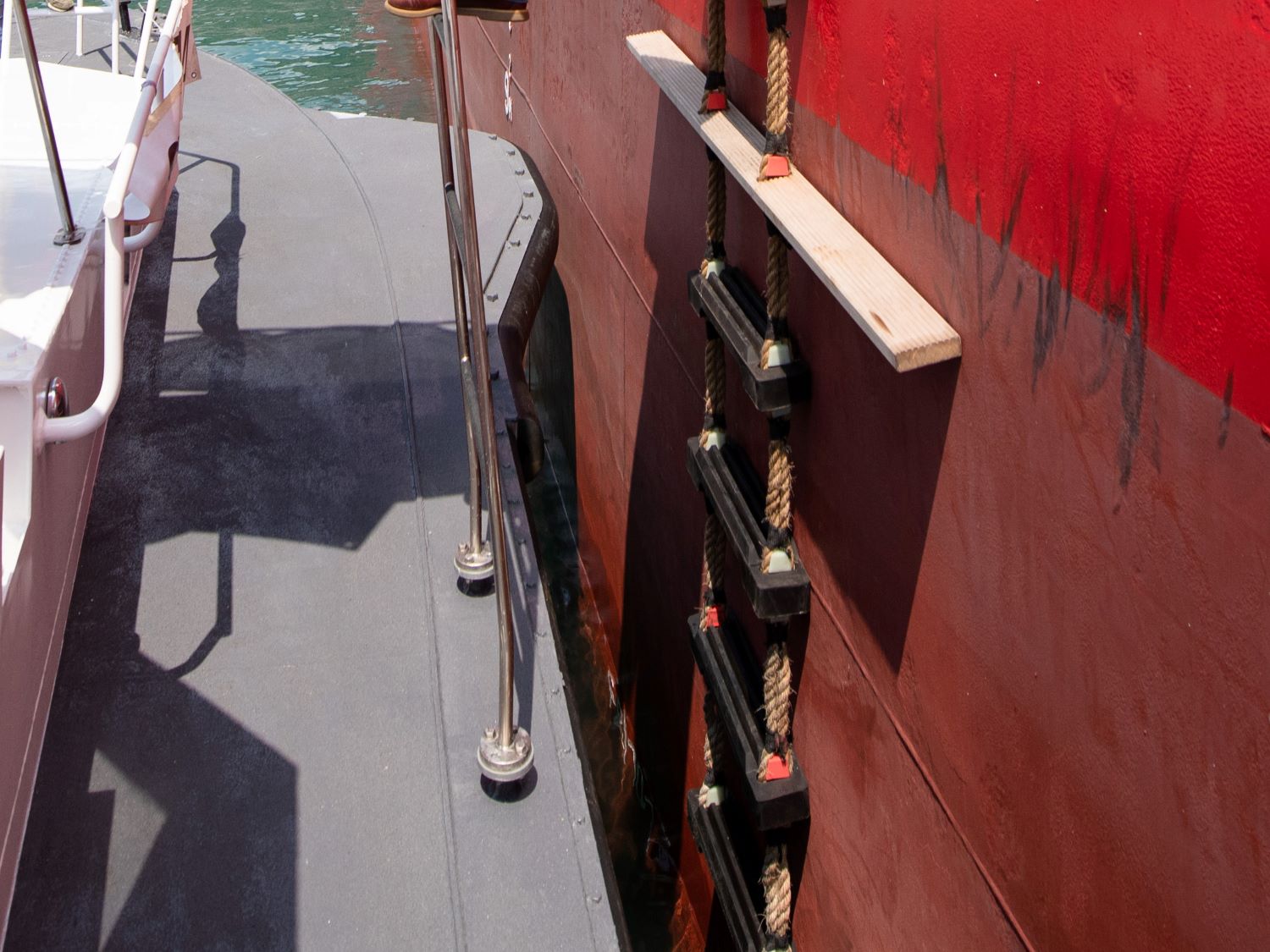
The entrapment problem has not yet been solved and has prompted me to seek a solution. My very simple idea (patented) has been internationally recognized as innovative.
My attention was focused on the pilot boat that has undergone a remarkable evolution over the years. Today there are pilot boats built with increasingly modern criteria and equipped with increasingly advanced equipment and instruments. But however modern and efficient the current pilot boats may be, they always risk trapping the pilot ladder and ultimately causing injuries to the pilot.
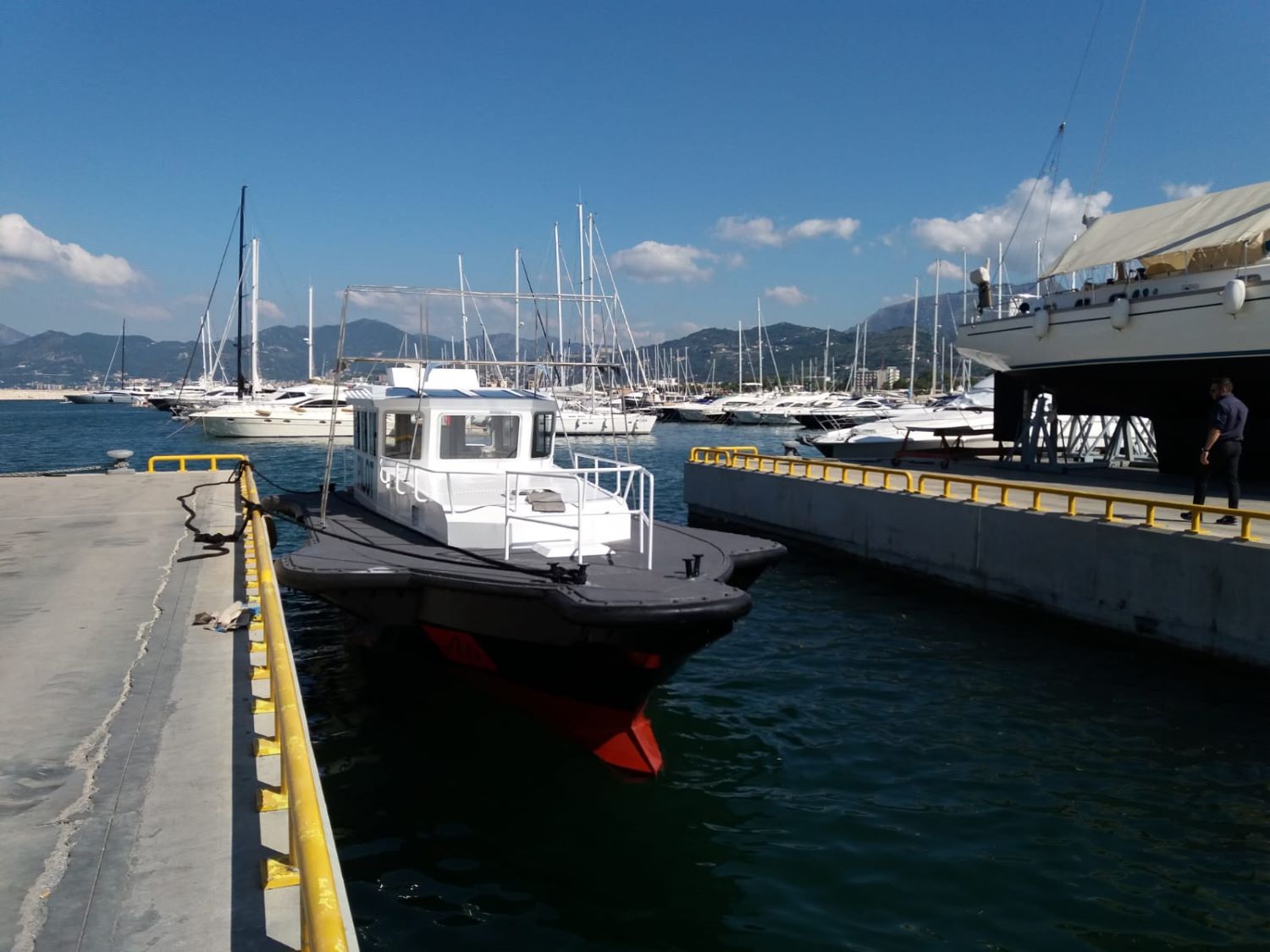
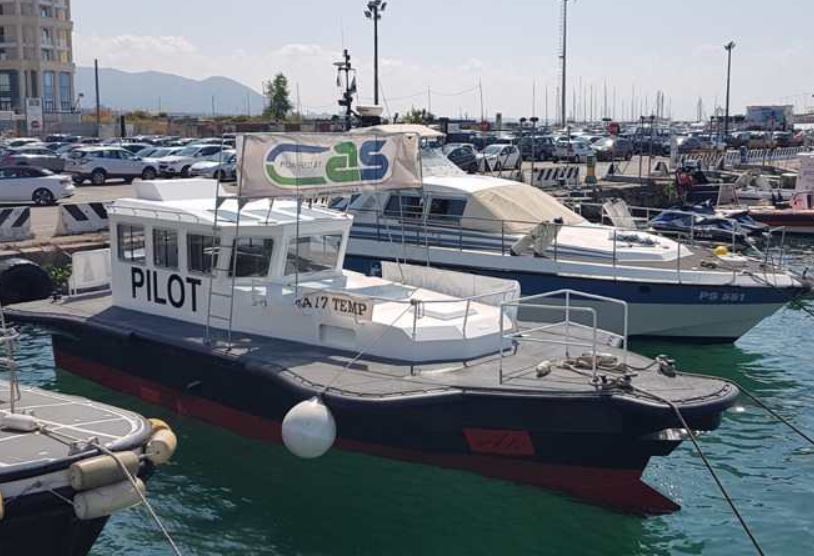
My innovation focuses on the main deck. It is designed with four protruding platforms, two on each side : two placed toward the bow and the other two placed to the rear forming a single body with the main deck. When the pilot boat is alongside the ship, the protrusions of each side create a recess in which the pilot ladder, even if dropped too low in the water, does not run the risk of being crushed or dragged. This recess has a wide space between the two protrusions where the pilot ladder is completely free when dropped, because the sides of the ship and the pilot boat are separated.
Despite the ship’s often high speed, the pilot boat can approach making sure that the pilot ladder is kept within the recess between the two protrusions until the pilot is ready to make the transfer. This also makes the job of the coxswain less stressful as they do not have to worry about entangling the pilot ladder and causing harm to their crew.
The attached images clearly highlight the recess. This innovation was the subject of a feasibility study carried out by a naval engineer and professor at the Federico II University of Naples. The prototype was built by a shipyard which has subsequently ceased its activity, however I am currently in contact with other shipyards interested in the project.
What do you think about the solution? Had you heard about it? Leave us your comments!
Let me introduce myself, I’m Captain Francesco Aiello. I currently live in my hometown of Sorrento (NA) Italy. For over thirty years I was a harbor pilot in Gaeta, which lies to the North of Naples. On many occasions, I have seen remarkable difficulties and dangerous situations that affect marine pilots during the transfer from the pilot boat to the ship and vice versa.
This is not always executed in the safest way. Pilots are involved in numerous accidents, some of which can be fatal.
This is mainly due to failing to observe the rules dictated by the IMO on the correct use of pilot ladders. However, even when respecting all of the standards laid down by SOLAS regarding the pilot ladder, accidents occur very frequently. The ladder can get trapped between the hulls of the ship and pilot boat. This happens when the pilot boat rises in the water, pins the ladder against the ship and then pulls it down.
This eventuality is also foreseen by the IMO which prescribes that the last four steps are not made of wood but of rubber.
The entrapment problem has not yet been solved and has prompted me to seek a solution. My very simple idea (patented) has been internationally recognized as innovative.
My attention was focused on the pilot boat that has undergone a remarkable evolution over the years. Today there are pilot boats built with increasingly modern criteria and equipped with increasingly advanced equipment and instruments. But however modern and efficient the current pilot boats may be, they always risk trapping the pilot ladder and ultimately causing injuries to the pilot.
My innovation focuses on the main deck. It is designed with four protruding platforms, two on each side : two placed toward the bow and the other two placed to the rear forming a single body with the main deck. When the pilot boat is alongside the ship, the protrusions of each side create a recess in which the pilot ladder, even if dropped too low in the water, does not run the risk of being crushed or dragged. This recess has a wide space between the two protrusions where the pilot ladder is completely free when dropped, because the sides of the ship and the pilot boat are separated.
Despite the ship’s often high speed, the pilot boat can approach making sure that the pilot ladder is kept within the recess between the two protrusions until the pilot is ready to make the transfer. This also makes the job of the coxswain less stressful as they do not have to worry about entangling the pilot ladder and causing harm to their crew.
The attached images clearly highlight the recess. This innovation was the subject of a feasibility study carried out by a naval engineer and professor at the Federico II University of Naples. The prototype was built by a shipyard which has subsequently ceased its activity, however I am currently in contact with other shipyards interested in the project.
What do you think about the solution? Had you heard about it? Leave us your comments!