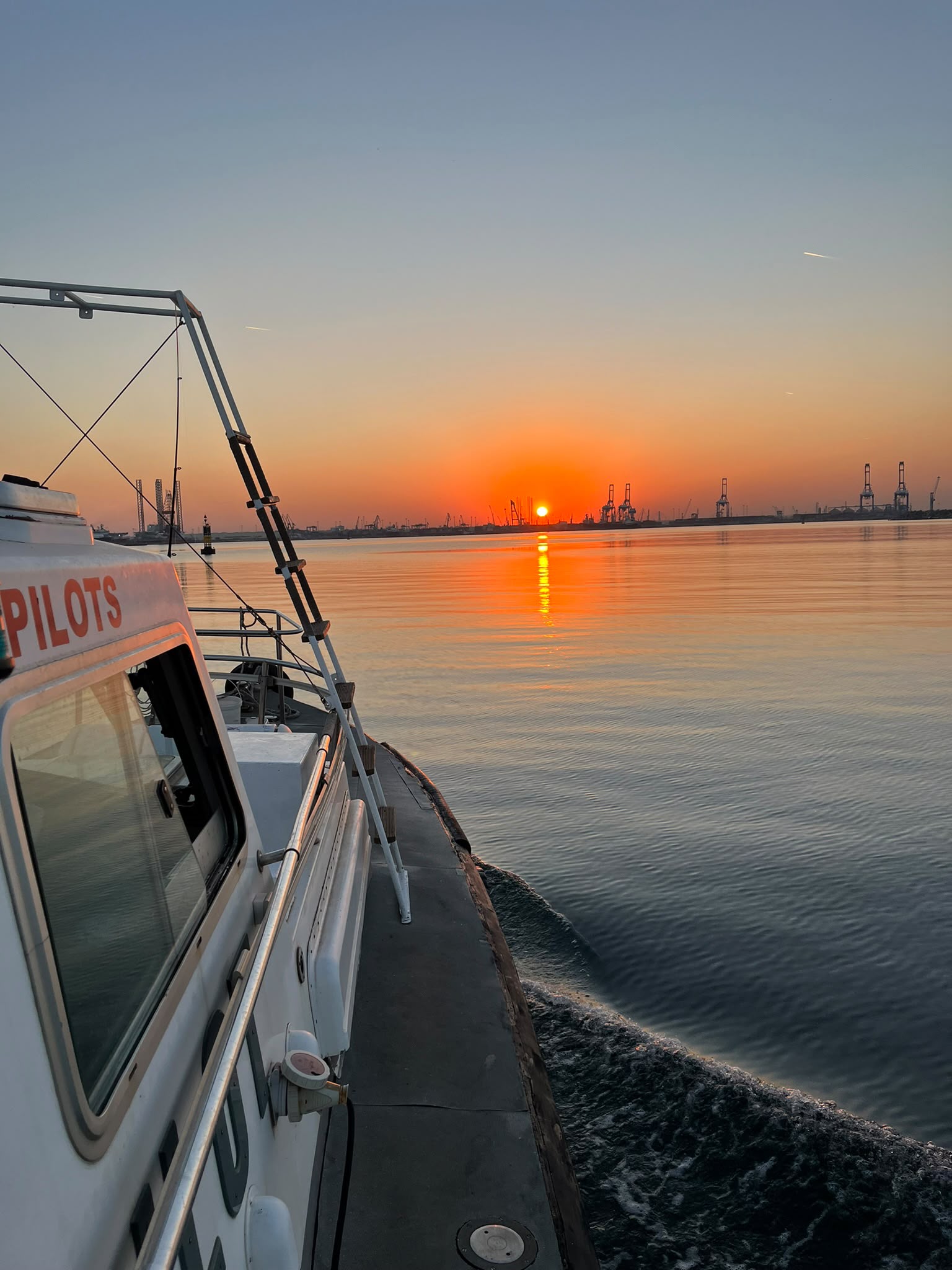
A container terminal at last light, seen from the deck of a vessel under pilotage. Private Archive
Why human sustainability must come first in maritime pilotage
An operational commentary by Esil Abibula, Maritime Pilot Class IMaritime research is increasingly concerned with bringing sustainability thinking and decarbonisation targets into pilotage education and training. On the bridge, that ambition meets a different set of constraints. This commentary examines where those concepts run up against the realities of a safety-critical profession: the cognitive limits of a fatigued human operator, the risks of digital fixation, and the unforgiving hydrodynamics of a loaded hull in confined water. My argument is straightforward. Human sustainability — across pilots, dispatchers, tug crews and boat crews alike — is not a companion to the environmental agenda. It is its precondition.
1 - The Illusion of Eco-Standardisation
A recurring theme in sustainability training is the standardisation of manoeuvres to reduce emissions. On a spreadsheet this is flawless. In a port it is not, because no two manoeuvres are the same. Each is dictated by variables that change from one minute to the next: localised currents, wind gusts, shallow-water effects, and the mechanical response of a particular hull on a particular day. Propeller pitch on an ageing or asymmetrically loaded vessel rarely behaves the way the technical drawings promise.
In my professional view, the risk is not that such benchmarks are inaccurate. It is that they divide the pilot’s attention. A pilot who knows their fuel curve is being scored is a pilot thinking about two things at once. In safety-critical work, performance is not measured on a spectrum. It is binary: either the manoeuvre ended without incident, or it did not.
2 - Cognitive Lock-On and the Use of Portable Pilot Units
Digitalisation is often counted as a sustainability measure — less paper, better data, Portable Pilot Units on every bridge. In my practical experience the instrument itself is not in question. On channels and rivers, and above all during the final approach to a berth, a PPU gives you lateral speed and rate of turn to a precision the naked eye cannot match. From the bridge wing, in the last hundred metres, that precision is what keeps steel off concrete. Digitalisation also has an obvious place away from the conning position. Paper vouchers, printed forms and handwritten signatures could disappear altogether: the Master–Pilot Exchange, the pilotage log and the tug voucher all belong on a tablet with a secure electronic signature. That would spare the paper, and it would give the master and the pilot back the minutes they now spend on forms — minutes worth more at the beginning of a manoeuvre than at the end of it.
What deserves more attention is how the instrument is used. A pilot who holds the tablet continuously, or whose eyes settle on the screen, is exposed to cognitive lock-on — the narrowing of attention onto a single information source until the world outside the window fades from awareness. This is not a flaw in the device. It is a property of human attention under load, and it applies equally to a radar screen or a paper chart held too close.
I have seen what that costs. A hand-held or badly positioned unit draws the eyes down, and what goes unnoticed is what a pilot is on the bridge to notice: a buoy that is not where it should be, a change in the water the instrument has not registered yet. GPS signals also drop out. When that happens, a pilot who has been reading the screen rather than the port needs several seconds to rebuild a picture they should never have put down.
The command style I would defend puts the instrument in its proper place. The pilot looks outside — at the buoys, the lights, the quay, the water — and asks the bridge team for short, specific figures: lateral speed, heading, drift, rate of turn. The brain correlates the spoken number with the visual scene almost instantly, and the pilot’s eyes never leave the environment they are responsible for. The PPU informs that picture. It should not replace it.
Digitalisation is often counted as a sustainability measure — less paper, better data, Portable Pilot Units on every bridge. In my practical experience the instrument itself is not in question. On channels and rivers, and above all during the final approach to a berth, a PPU gives you lateral speed and rate of turn to a precision the naked eye cannot match. From the bridge wing, in the last hundred metres, that precision is what keeps steel off concrete. Digitalisation also has an obvious place away from the conning position. Paper vouchers, printed forms and handwritten signatures could disappear altogether: the Master–Pilot Exchange, the pilotage log and the tug voucher all belong on a tablet with a secure electronic signature. That would spare the paper, and it would give the master and the pilot back the minutes they now spend on forms — minutes worth more at the beginning of a manoeuvre than at the end of it.
What deserves more attention is how the instrument is used. A pilot who holds the tablet continuously, or whose eyes settle on the screen, is exposed to cognitive lock-on — the narrowing of attention onto a single information source until the world outside the window fades from awareness. This is not a flaw in the device. It is a property of human attention under load, and it applies equally to a radar screen or a paper chart held too close.
I have seen what that costs. A hand-held or badly positioned unit draws the eyes down, and what goes unnoticed is what a pilot is on the bridge to notice: a buoy that is not where it should be, a change in the water the instrument has not registered yet. GPS signals also drop out. When that happens, a pilot who has been reading the screen rather than the port needs several seconds to rebuild a picture they should never have put down.
The command style I would defend puts the instrument in its proper place. The pilot looks outside — at the buoys, the lights, the quay, the water — and asks the bridge team for short, specific figures: lateral speed, heading, drift, rate of turn. The brain correlates the spoken number with the visual scene almost instantly, and the pilot’s eyes never leave the environment they are responsible for. The PPU informs that picture. It should not replace it.
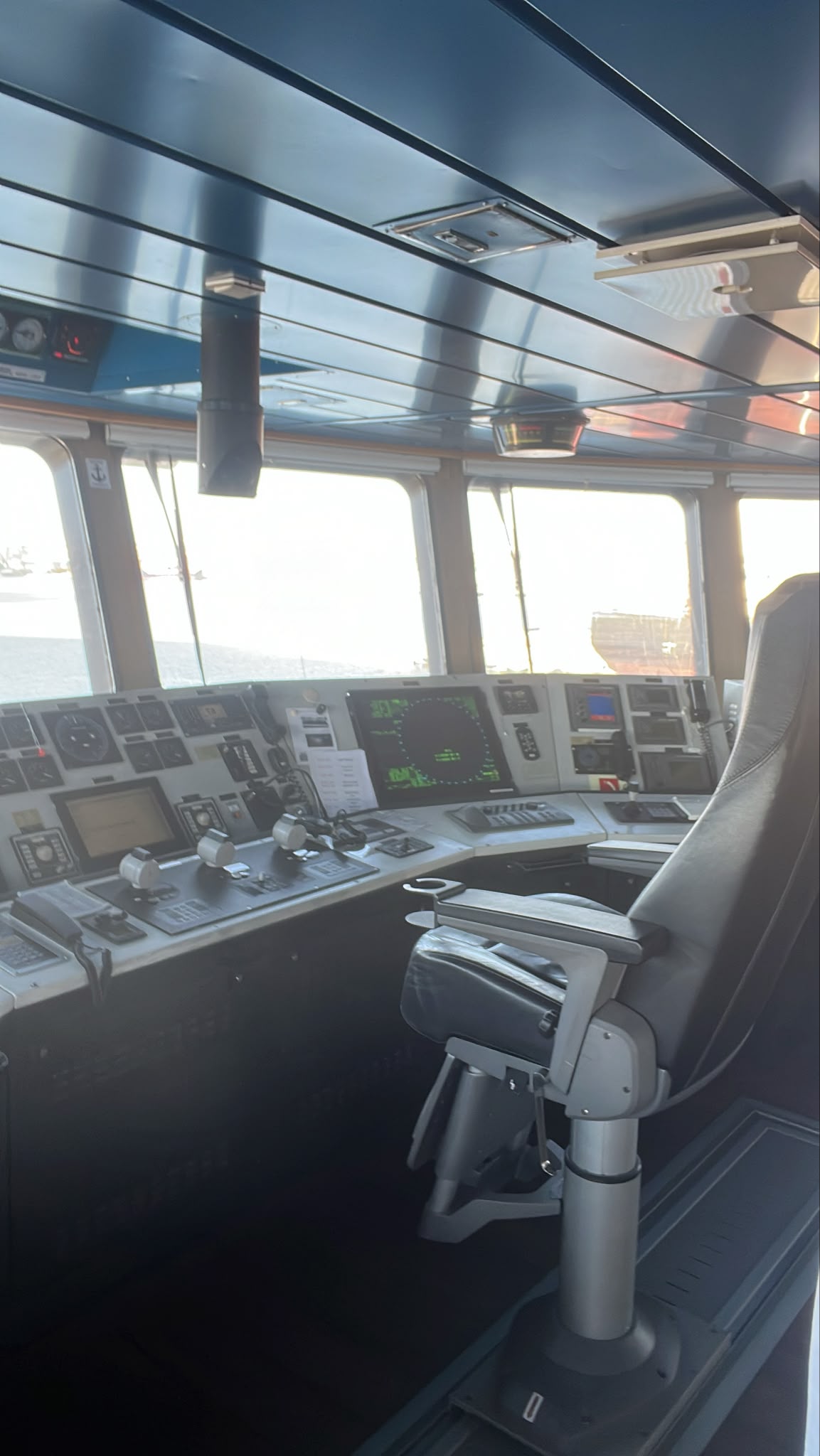
The instrument and the window. Radar, conning display and the view outside — the picture the screen is there to serve, not to replace. · Private Archive
The instrument and the window. Radar, conning display and the view outside — the picture the screen is there to serve, not to replace. · Private Archive
3 - The Surgeon Analogy: The Pilot’s Overriding Authority
Consider a neurosurgeon in the middle of a complex operation. No administrator walks into that theatre to point out that too much sterile material is being used, and no auditor reviews the case afterwards to ask why the procedure ran an hour long. In that room success is binary — the patient recovers or does not — and the cost of the materials consumed is not a question anyone raises while the patient is open.
The bridge of a vessel during a difficult berthing is the same kind of environment. Pilot training under SOLAS and MARPOL already carries a duty to protect life and prevent pollution; that duty is not in competition with sustainability, it precedes it. When a pilot has the con, their judgement cannot be weighed against an efficiency index without something being given up, and what is given up is margin. The clarification at the end of this article sets out what I mean by the pilot’s authority.
4 - Human Sustainability: Shift Systems, Legal Barriers and Compensation
More than ninety per cent of world trade moves by sea, and almost all of it passes through the hands of a pilot at each end of the voyage. We are the first and the last people to board a foreign vessel in a country’s waters. Not everyone can do this work: climbing a ladder at height in a seaway and then placing a hull the size of a stadium between two structures with metres to spare requires a combination of technical skill and mental endurance that cannot be improvised.
Because port throughput depends on this narrow group of people, their working conditions are not a matter of staff welfare. Sound rosters, controlled stress and managed fatigue are safety measures, and they should be treated with the same seriousness as any other safety measure. Compensation belongs in the same category: pay that reflects the responsibility is part of keeping the profession staffed by people capable of carrying it.
The obstacle is often legal rather than commercial. In several countries, sustainable shift models cannot be introduced because national legislation does not permit them, and the consequences are predictable — overextended shifts, accumulated fatigue, and the occupational illnesses that follow. Workable frameworks already exist elsewhere; they can be adopted.
I would ask EMPA and IMPA to press for work-and-rest frameworks that are legally binding and grounded in fatigue science rather than in local custom. What matters is not one particular roster but that a roster can be defended: twelve hours on and twenty-four off, or twelve and forty-eight, followed by a mandatory seventy-two hours of rest — or any other configuration shown to let a human being recover properly. On-call protocols belong inside the same framework, so that passive waiting stops being counted as rest.
Consider a neurosurgeon in the middle of a complex operation. No administrator walks into that theatre to point out that too much sterile material is being used, and no auditor reviews the case afterwards to ask why the procedure ran an hour long. In that room success is binary — the patient recovers or does not — and the cost of the materials consumed is not a question anyone raises while the patient is open.
The bridge of a vessel during a difficult berthing is the same kind of environment. Pilot training under SOLAS and MARPOL already carries a duty to protect life and prevent pollution; that duty is not in competition with sustainability, it precedes it. When a pilot has the con, their judgement cannot be weighed against an efficiency index without something being given up, and what is given up is margin. The clarification at the end of this article sets out what I mean by the pilot’s authority.
4 - Human Sustainability: Shift Systems, Legal Barriers and Compensation
More than ninety per cent of world trade moves by sea, and almost all of it passes through the hands of a pilot at each end of the voyage. We are the first and the last people to board a foreign vessel in a country’s waters. Not everyone can do this work: climbing a ladder at height in a seaway and then placing a hull the size of a stadium between two structures with metres to spare requires a combination of technical skill and mental endurance that cannot be improvised.
Because port throughput depends on this narrow group of people, their working conditions are not a matter of staff welfare. Sound rosters, controlled stress and managed fatigue are safety measures, and they should be treated with the same seriousness as any other safety measure. Compensation belongs in the same category: pay that reflects the responsibility is part of keeping the profession staffed by people capable of carrying it.
The obstacle is often legal rather than commercial. In several countries, sustainable shift models cannot be introduced because national legislation does not permit them, and the consequences are predictable — overextended shifts, accumulated fatigue, and the occupational illnesses that follow. Workable frameworks already exist elsewhere; they can be adopted.
I would ask EMPA and IMPA to press for work-and-rest frameworks that are legally binding and grounded in fatigue science rather than in local custom. What matters is not one particular roster but that a roster can be defended: twelve hours on and twenty-four off, or twelve and forty-eight, followed by a mandatory seventy-two hours of rest — or any other configuration shown to let a human being recover properly. On-call protocols belong inside the same framework, so that passive waiting stops being counted as rest.
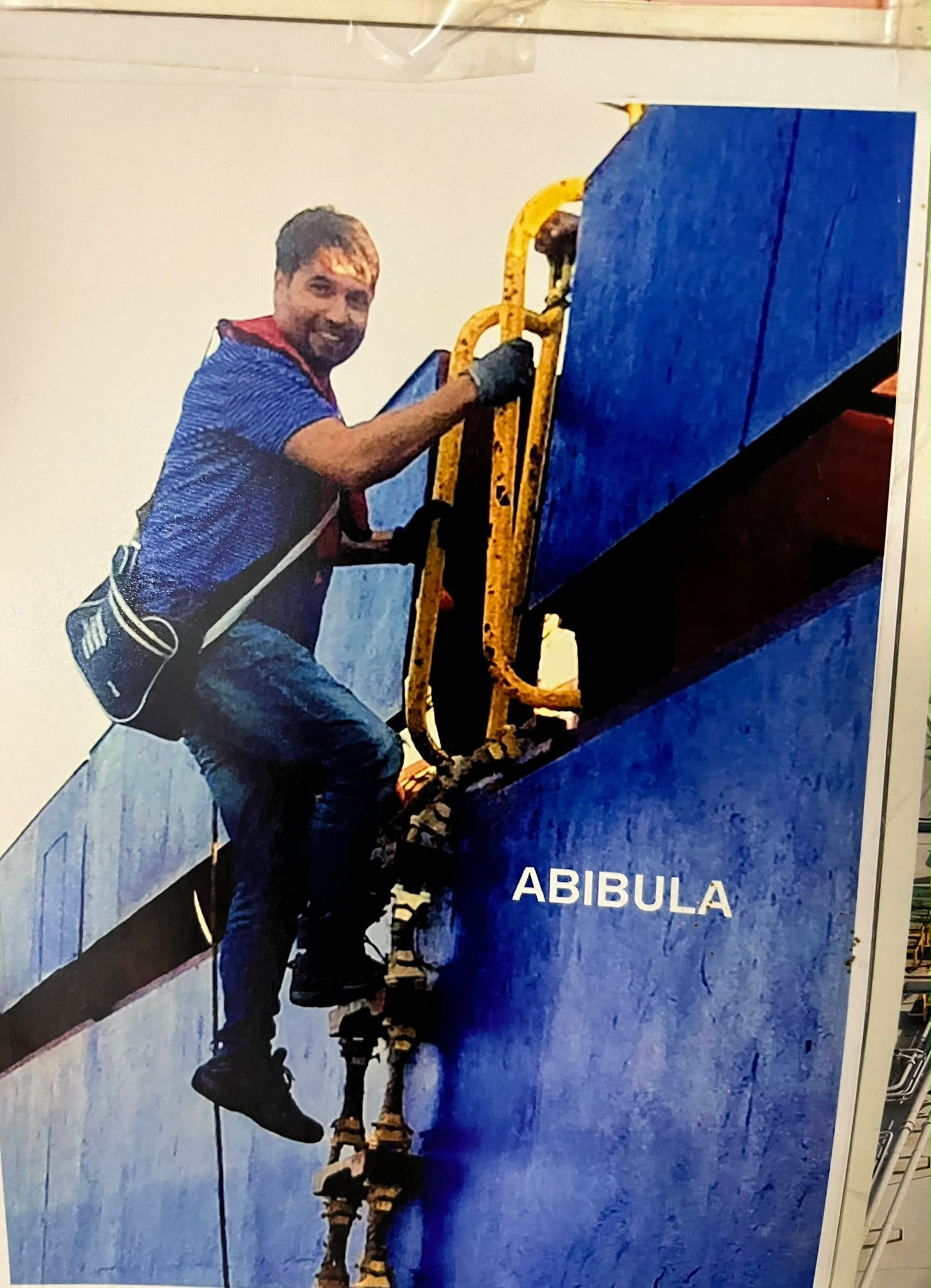
Boarding at the start of a career, 2014 or 2015. The ladder is the first part of the work and the least forgiving. · Photo: Captain Traian Chirita
Boarding at the start of a career, 2014 or 2015. The ladder is the first part of the work and the least forgiving. · Photo: Captain Traian Chirita
5 - Recruitment and the Psychological Profile of the Pilot
Recruitment should be handled by specialists, using psychological and stress-endurance assessment rather than seniority alone. The profile required is specific: resistance to acute stress and control over one’s own emotional and nervous reactions. That resilience is needed for the pilot’s own decisions, but it is needed just as much for everyone else on the bridge.
Master mariners arrive with deep-sea experience and often without the repetitive close-quarters ship handling that a congested port demands. A captain who has crossed oceans without difficulty can become intensely stressed during a port entry and react in ways nobody on the bridge expects. Absorbing that anxiety, projecting calm and steadying the bridge team is an unwritten competence of our profession, and in my view one of the most important. A pilot does not only manoeuvre the vessel. They stabilise the people commanding it.
6 - Technical Response Lag and the Risk of Tug Girting
Every engine command carries a response lag, and it is not confined to one kind of order. A kick ahead is a deliberate burst — in my estimate about ten seconds, though I know of no standard that fixes it — with the engine put from stop to dead slow, or to whatever setting the manoeuvre calls for, to drive water across the rudder. The response lag is a different thing: the time between the order on the telegraph and the engine actually running ahead or astern. That delay is there just as much when you go to dead slow ahead as when you kick her. The engine answers, the flow builds, and only then does the hull begin to move. Nothing in that sequence can be hurried, and a pilot learns to feel the gap rather than count it.
On older large vessels there is a second constraint behind the first. Starting and reversing the main engine consumes compressed air, and the supply is finite. A rapid sequence of uncoordinated engine orders can exhaust the starting air and leave the engine unavailable in exactly the place where it is needed.
This is work for the Master–Pilot Exchange, and the pilot has to do it actively. If the master does not offer the figures, ask for them: engine response times ahead and astern, the starting air capacity, and how quickly that air is consumed. The last of these is usually left out. A capacity figure without a consumption rate tells you very little about how many orders you still have in hand.
The same understanding of delay protects the tugs. Orders must be short, exact and unambiguous, and acknowledged immediately. Port administrations should institutionalise that understanding rather than hope for it: formal communication workshops between the pilot corps and the tug crews every quarter, and a dedicated safety briefing before any manoeuvre known to be complex or high-risk. Neither is a courtesy. Both are how a tug master comes to know what a pilot will ask for before the radio call is made.
Above roughly 1.5 to 2 knots, a tug’s useful effect falls away almost entirely. Maximum mechanical effectiveness comes when the tug pulls broadside — la travers — with the assisted vessel’s headway at zero. Applying engine power while the tug’s line is fully tight (voltata) and the speed is excessive exposes the tug to girting: the lateral capsize of the tug under the momentum of the ship it is assisting. Tug crews have been lost this way.
Recruitment should be handled by specialists, using psychological and stress-endurance assessment rather than seniority alone. The profile required is specific: resistance to acute stress and control over one’s own emotional and nervous reactions. That resilience is needed for the pilot’s own decisions, but it is needed just as much for everyone else on the bridge.
Master mariners arrive with deep-sea experience and often without the repetitive close-quarters ship handling that a congested port demands. A captain who has crossed oceans without difficulty can become intensely stressed during a port entry and react in ways nobody on the bridge expects. Absorbing that anxiety, projecting calm and steadying the bridge team is an unwritten competence of our profession, and in my view one of the most important. A pilot does not only manoeuvre the vessel. They stabilise the people commanding it.
6 - Technical Response Lag and the Risk of Tug Girting
Every engine command carries a response lag, and it is not confined to one kind of order. A kick ahead is a deliberate burst — in my estimate about ten seconds, though I know of no standard that fixes it — with the engine put from stop to dead slow, or to whatever setting the manoeuvre calls for, to drive water across the rudder. The response lag is a different thing: the time between the order on the telegraph and the engine actually running ahead or astern. That delay is there just as much when you go to dead slow ahead as when you kick her. The engine answers, the flow builds, and only then does the hull begin to move. Nothing in that sequence can be hurried, and a pilot learns to feel the gap rather than count it.
On older large vessels there is a second constraint behind the first. Starting and reversing the main engine consumes compressed air, and the supply is finite. A rapid sequence of uncoordinated engine orders can exhaust the starting air and leave the engine unavailable in exactly the place where it is needed.
This is work for the Master–Pilot Exchange, and the pilot has to do it actively. If the master does not offer the figures, ask for them: engine response times ahead and astern, the starting air capacity, and how quickly that air is consumed. The last of these is usually left out. A capacity figure without a consumption rate tells you very little about how many orders you still have in hand.
The same understanding of delay protects the tugs. Orders must be short, exact and unambiguous, and acknowledged immediately. Port administrations should institutionalise that understanding rather than hope for it: formal communication workshops between the pilot corps and the tug crews every quarter, and a dedicated safety briefing before any manoeuvre known to be complex or high-risk. Neither is a courtesy. Both are how a tug master comes to know what a pilot will ask for before the radio call is made.
Above roughly 1.5 to 2 knots, a tug’s useful effect falls away almost entirely. Maximum mechanical effectiveness comes when the tug pulls broadside — la travers — with the assisted vessel’s headway at zero. Applying engine power while the tug’s line is fully tight (voltata) and the speed is excessive exposes the tug to girting: the lateral capsize of the tug under the momentum of the ship it is assisting. Tug crews have been lost this way.
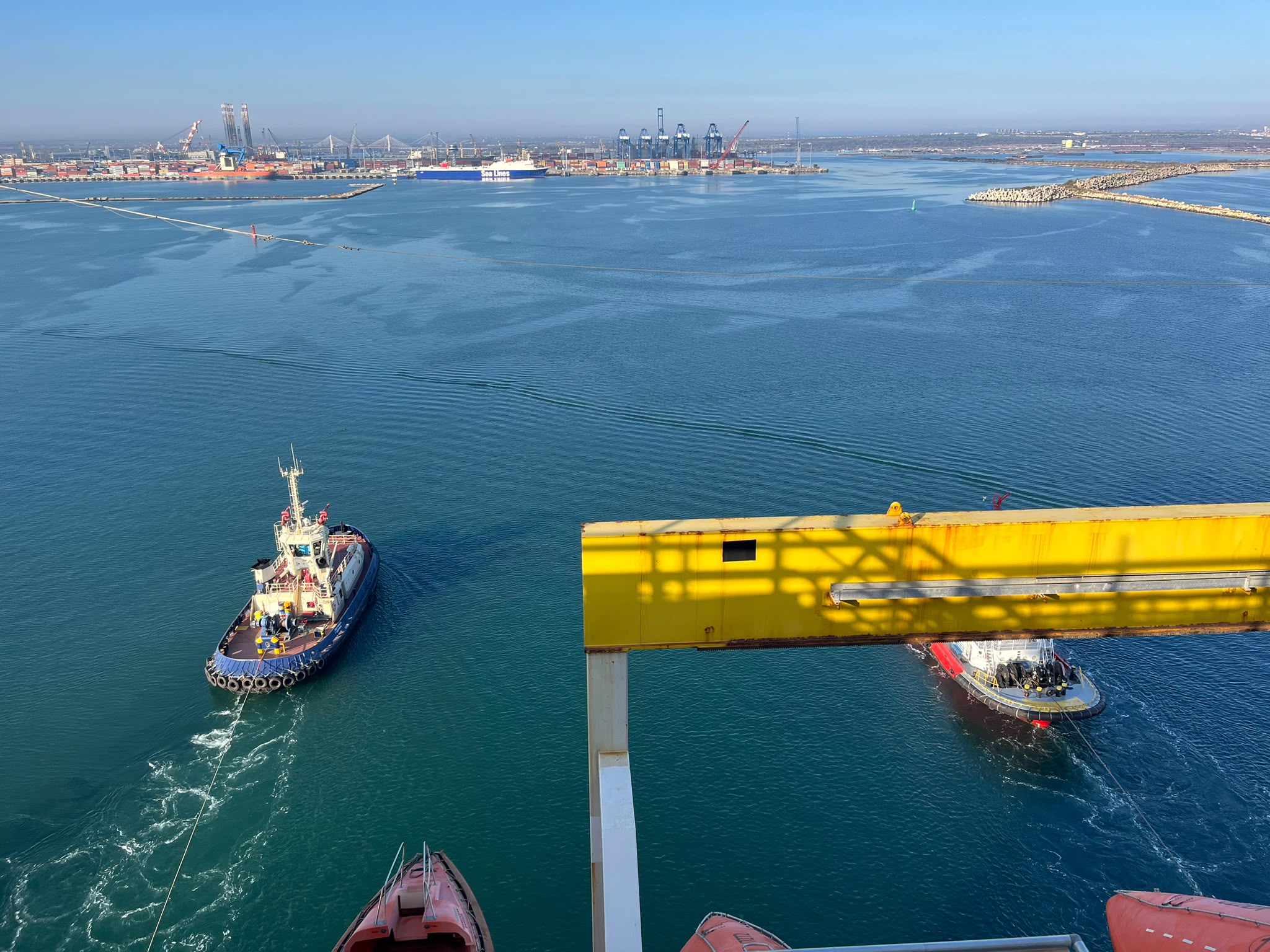
Two tugs made fast and working. Above roughly 1.5 to 2 knots their useful effect falls away almost entirely. · Private Archive
Two tugs made fast and working. Above roughly 1.5 to 2 knots their useful effect falls away almost entirely. · Private Archive
7 - Suez and Baltimore: The Financial and Human Scale of Failure
A single error — a moment’s inattention from accumulated fatigue, a decision shaded by the wrong incentive — can produce consequences on a global scale. Two recent events make the point better than any argument. The grounding of the Ever Given in the Suez Canal and the collapse of the Francis Scott Key Bridge in Baltimore after the Dali lost power were not logistical inconveniences. They removed billions of dollars from the world economy in damaged infrastructure, lost cargo and frozen supply chains.
In Baltimore they also cost lives. Six road workers died when the bridge came down. That is the empirical proof, if any were needed, that an operational failure on a large vessel reaches far beyond the vessel.
I draw no conclusion here about the technical or legal causes of either case; that belongs to the official investigators and not to me. I cite them for their scale alone. Set against consequences of that order, investment in workable rosters, fatigue management and proper pilot compensation is not a cost. It is the cheapest insurance a maritime nation can buy.
8 - The Port Safety Chain and the Overloaded Dispatcher
Guiding a ship from sea to berth is a chain, and every link carries the same weight: the VTS station, pilotage dispatch, tug coordination, the pilot boat crew, the port authority, the berth operators. The pilot is the visible end of it and also, in a quiet way, a diplomatic one — the first person from that country to set foot on a foreign vessel, and the last to leave it.
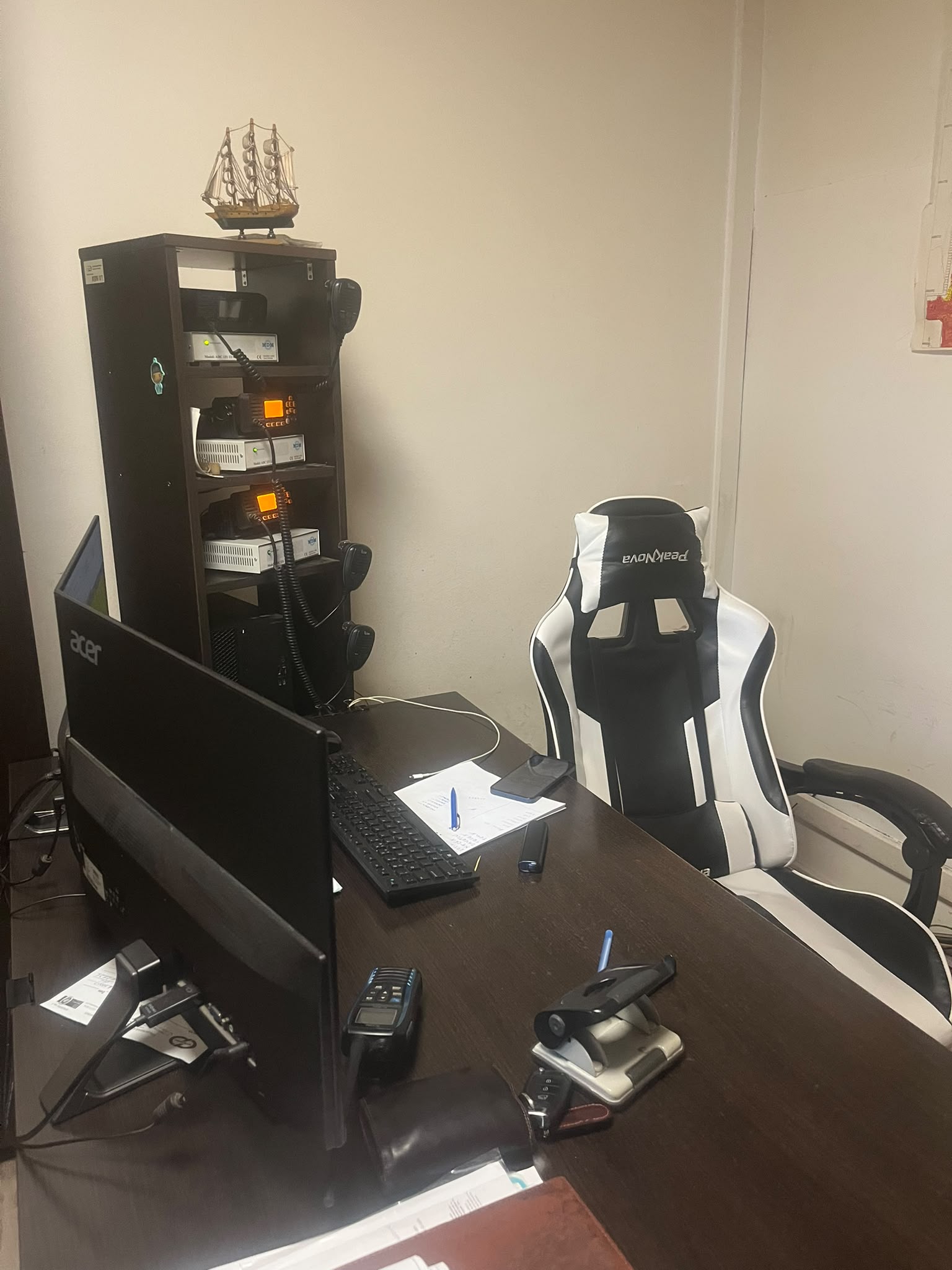
Behind that visible end sit the dispatchers, and they are where this chain is weakest. In many pilot stations a single dispatcher covers a twelve-hour shift alone, filtering pilot boat movements, radio traffic from inbound vessels, VTS coordination, agents and the on-call roster simultaneously. They are in permanent contact with every party in the operation and they are the link that keeps those parties connected to one another. This is the least discussed fatigue problem in our industry and, in my view, one of the most serious. A tired dispatcher does not make a dramatic error. They introduce a delay — a call answered a minute late, an update not passed on — and the delay travels down the chain until it reaches the water.
One person carrying that load for twelve continuous hours is a single point of failure in the port’s safety system, and it is a reliable source of chronic stress-related illness in the people who carry it. The position should be doubled on every shift.
A single error — a moment’s inattention from accumulated fatigue, a decision shaded by the wrong incentive — can produce consequences on a global scale. Two recent events make the point better than any argument. The grounding of the Ever Given in the Suez Canal and the collapse of the Francis Scott Key Bridge in Baltimore after the Dali lost power were not logistical inconveniences. They removed billions of dollars from the world economy in damaged infrastructure, lost cargo and frozen supply chains.
In Baltimore they also cost lives. Six road workers died when the bridge came down. That is the empirical proof, if any were needed, that an operational failure on a large vessel reaches far beyond the vessel.
I draw no conclusion here about the technical or legal causes of either case; that belongs to the official investigators and not to me. I cite them for their scale alone. Set against consequences of that order, investment in workable rosters, fatigue management and proper pilot compensation is not a cost. It is the cheapest insurance a maritime nation can buy.
8 - The Port Safety Chain and the Overloaded Dispatcher
Guiding a ship from sea to berth is a chain, and every link carries the same weight: the VTS station, pilotage dispatch, tug coordination, the pilot boat crew, the port authority, the berth operators. The pilot is the visible end of it and also, in a quiet way, a diplomatic one — the first person from that country to set foot on a foreign vessel, and the last to leave it.
Behind that visible end sit the dispatchers, and they are where this chain is weakest. In many pilot stations a single dispatcher covers a twelve-hour shift alone, filtering pilot boat movements, radio traffic from inbound vessels, VTS coordination, agents and the on-call roster simultaneously. They are in permanent contact with every party in the operation and they are the link that keeps those parties connected to one another. This is the least discussed fatigue problem in our industry and, in my view, one of the most serious. A tired dispatcher does not make a dramatic error. They introduce a delay — a call answered a minute late, an update not passed on — and the delay travels down the chain until it reaches the water.
One person carrying that load for twelve continuous hours is a single point of failure in the port’s safety system, and it is a reliable source of chronic stress-related illness in the people who carry it. The position should be doubled on every shift.
A dispatcher’s position. One operator holds this desk for twelve hours at a time. · Private Archive
A dispatcher’s position. One operator holds this desk for twelve hours at a time. · Private Archive
9 - Hydrodynamic Forces and Pivot Point Dynamics
Practical ship handling is a continuous negotiation between mechanical force and everything the environment contributes: wind, current, draft, and buoyage that may be complete, degraded or absent. At the centre of that negotiation sits the pivot point, the imaginary axis about which the hull rotates.
In a simulator the pivot point is a calculation. On the water it moves. With the vessel stopped it lies amidships; as headway builds, pressure on the bow drives it forward to roughly a quarter of the length from the stem; going astern, it shifts aft. Deep draft compounds the effect, making the hull heavy and reluctant in a turning circle — girație — at low speed.
The practical consequence is one no curriculum conveys. Turning slowly, a vessel comes round ninety degrees almost on the spot. Above about four knots, the same ninety-degree turn carries the vessel forward through roughly four times her own length before it is complete. In a turning basin — cuva de întoarcere — or a narrow channel, that difference decides whether you make the turn or not. I give this as what I have observed on the vessels I handle, not as a figure from a manual.
10 - Eighteen Months: A Seasonal Training Framework
The training of an apprentice pilot should run for a minimum of eighteen months. Twelve months or less cannot be sufficient, and the reason is seasonal rather than administrative. A trainee must handle vessels through a complete year — winter gales and freezing conditions, spring, autumn, the extreme heat of summer, fog that closes visibility to nothing, and the traffic peaks particular to that port — and then have the remaining six months to consolidate what those conditions taught them. A curriculum that ends after twelve months has, at best, exposed the trainee to each condition once. This is my own professional view, not a standard I can point to; the frameworks I know of are shorter, and I believe they are too short.
The sequence inside those months matters as much as their number. A trainee should first master boarding and disembarking, then ship handling, then communication with the bridge team, and only after that the issuing of orders to tug masters. Taken in that order, the work builds what no classroom supplies: communication under load, decisions under time pressure, the feel of a hull, and a working knowledge of the port from the water and from the shore alike.
On recruitment: I would draw trainees exclusively from experienced master mariners. This is a craft learned on the water over years, and states should protect it as deliberately as they protect the training of their doctors and their airline pilots.
Practical ship handling is a continuous negotiation between mechanical force and everything the environment contributes: wind, current, draft, and buoyage that may be complete, degraded or absent. At the centre of that negotiation sits the pivot point, the imaginary axis about which the hull rotates.
In a simulator the pivot point is a calculation. On the water it moves. With the vessel stopped it lies amidships; as headway builds, pressure on the bow drives it forward to roughly a quarter of the length from the stem; going astern, it shifts aft. Deep draft compounds the effect, making the hull heavy and reluctant in a turning circle — girație — at low speed.
The practical consequence is one no curriculum conveys. Turning slowly, a vessel comes round ninety degrees almost on the spot. Above about four knots, the same ninety-degree turn carries the vessel forward through roughly four times her own length before it is complete. In a turning basin — cuva de întoarcere — or a narrow channel, that difference decides whether you make the turn or not. I give this as what I have observed on the vessels I handle, not as a figure from a manual.
10 - Eighteen Months: A Seasonal Training Framework
The training of an apprentice pilot should run for a minimum of eighteen months. Twelve months or less cannot be sufficient, and the reason is seasonal rather than administrative. A trainee must handle vessels through a complete year — winter gales and freezing conditions, spring, autumn, the extreme heat of summer, fog that closes visibility to nothing, and the traffic peaks particular to that port — and then have the remaining six months to consolidate what those conditions taught them. A curriculum that ends after twelve months has, at best, exposed the trainee to each condition once. This is my own professional view, not a standard I can point to; the frameworks I know of are shorter, and I believe they are too short.
The sequence inside those months matters as much as their number. A trainee should first master boarding and disembarking, then ship handling, then communication with the bridge team, and only after that the issuing of orders to tug masters. Taken in that order, the work builds what no classroom supplies: communication under load, decisions under time pressure, the feel of a hull, and a working knowledge of the port from the water and from the shore alike.
On recruitment: I would draw trainees exclusively from experienced master mariners. This is a craft learned on the water over years, and states should protect it as deliberately as they protect the training of their doctors and their airline pilots.
11 - Crisis Management and Operational Flexibility
Training and legislation have to acknowledge something practitioners already know: the sea and the port produce situations that lie outside any protocol. A pilot must be able to act decisively and quickly within the international framework while retaining the judgement to improvise when the framework runs out.
Take a fire breaking out during a manoeuvre, with no tug or pilot boat immediately alongside. One thing has to be said plainly before the sequence: the pilot does not hold ultimate legal command of the vessel. The pilot provides tactical recommendations and expert operational support. Within that limit, the steps are short and lawful:
Training and legislation have to acknowledge something practitioners already know: the sea and the port produce situations that lie outside any protocol. A pilot must be able to act decisively and quickly within the international framework while retaining the judgement to improvise when the framework runs out.
Take a fire breaking out during a manoeuvre, with no tug or pilot boat immediately alongside. One thing has to be said plainly before the sequence: the pilot does not hold ultimate legal command of the vessel. The pilot provides tactical recommendations and expert operational support. Within that limit, the steps are short and lawful:
- Alert the competent port authority. This comes first, before anything else.
- Follow the instructions of the vessel's fire muster roll, in close coordination with the master.
- At the master's request, provide the operational support needed to bring the vessel to the safest available neutral or isolated area of the port complex — and stay with the bridge team until conditions allow the pilot to disembark safely.
Together these protect the port infrastructure, the vessel, the crew and the pilot. Operational flexibility is not improvisation for its own sake. It is the capacity to reach the safest lawful decision while the pressure is at its highest.
12 - Near-Miss Analysis: Conditions Versus Preventive Decision-Making
Near misses teach more than any other kind of case, because they are where the system was tested and did not quite fail. Two of them come from my own service, both in winds above 15 metres per second and a sea over two metres. In the first, the preventive pillar gave way. In the second, it held.
The first concerns a second tug.
Local port rules did not require a second tug for a vessel of that length, and none was ordered. I recommended one anyway, and I recommended it urgently, at the Master–Pilot Exchange: the wind strength, its direction relative to the berth and the vessel's ballast condition together left almost nothing in reserve. The master did not accept the recommendation. He was entitled not to. No rule obliged him, and the decision was his to make.
What changed his mind was not an argument from me. It was the port itself. Once inside, having seen the hydrometeorological conditions for himself and the complexity of the berth ahead, he asked for the second tug. From the moment he understood what the berth and the conditions were asking of him, there was exactly one mile left to the mooring. The second tug could not cover that distance in time. We completed the manoeuvre with the one we had. It ended without damage. It also ended without margin.
I do not tell this as a complaint against a master. Any of us would recognise the moment when a berth stops being a line on a chart and becomes a physical place. The lesson lies in where the decision has to be made. The Master–Pilot Exchange is the preventive pillar of the entire operation, and it is the last point at which a second tug is a decision rather than a wish. A recommendation made there has no regulation standing behind it. It has only the pilot's local knowledge — and it must be given the weight that knowledge deserves, by the pilot who states it and by the master who receives it. A safety resource requested too late has no operational value left at all. Risk management cannot be built on a late change of mind, and it cannot rely on the repetition of miracles.
One more thing has to be said, and it is not about the master in this case. Cost instructions reach a bridge from other directions. Owners and agents routinely press a master to hold to the minimum number of tugs the port regulations require, and to refuse a further one because it would appear on an invoice. That pressure must never narrow a master's freedom to ask for what the conditions in front of him demand. An agent should put a situation to a master on its safety merits and leave the invoice outside the room. Safety prevention has no cost.
The second concerns a transfer.
It involved boarding and disembarking a newly built vessel whose superstructure was unlike those we normally work with. Because of its shape, a safe transfer from the pilot boat was possible only on a fully perpendicular approach and in proper shelter. That assessment could be made from sea level and from nowhere else.
I asked the master to bring the vessel into the shelter of the breakwater before any transfer was attempted. That decision protected everyone the operation put at risk — the boat's crew, the pilot crossing between the two vessels, and the ship herself — and master and pilot were under the same obligation in making it: SOLAS and the IMO resolutions on pilot transfer place the safety of life above traffic protocols, and neither of us had the discretion to trade it away.
The three people who can judge whether shelter is needed are the ones physically in the operation: the master, the pilot, and the master of the pilot boat. Between them they have the standing to arrange the safest boarding, and they do not need permission from ashore before they do it. VTS has a real and necessary role in the movement of a port. But nobody watching a screen can feel two metres of swell working against a hull of an unfamiliar shape.
The transfer remained physically impossible until the vessel reached the exact sheltered position I had designated from the boat. That is the proof: the on-scene assessment of the frontline team must override remote monitoring. Safety of life at sea is immediate. It does not wait for an administrative decision.
12 - Near-Miss Analysis: Conditions Versus Preventive Decision-Making
Near misses teach more than any other kind of case, because they are where the system was tested and did not quite fail. Two of them come from my own service, both in winds above 15 metres per second and a sea over two metres. In the first, the preventive pillar gave way. In the second, it held.
The first concerns a second tug.
Local port rules did not require a second tug for a vessel of that length, and none was ordered. I recommended one anyway, and I recommended it urgently, at the Master–Pilot Exchange: the wind strength, its direction relative to the berth and the vessel's ballast condition together left almost nothing in reserve. The master did not accept the recommendation. He was entitled not to. No rule obliged him, and the decision was his to make.
What changed his mind was not an argument from me. It was the port itself. Once inside, having seen the hydrometeorological conditions for himself and the complexity of the berth ahead, he asked for the second tug. From the moment he understood what the berth and the conditions were asking of him, there was exactly one mile left to the mooring. The second tug could not cover that distance in time. We completed the manoeuvre with the one we had. It ended without damage. It also ended without margin.
I do not tell this as a complaint against a master. Any of us would recognise the moment when a berth stops being a line on a chart and becomes a physical place. The lesson lies in where the decision has to be made. The Master–Pilot Exchange is the preventive pillar of the entire operation, and it is the last point at which a second tug is a decision rather than a wish. A recommendation made there has no regulation standing behind it. It has only the pilot's local knowledge — and it must be given the weight that knowledge deserves, by the pilot who states it and by the master who receives it. A safety resource requested too late has no operational value left at all. Risk management cannot be built on a late change of mind, and it cannot rely on the repetition of miracles.
One more thing has to be said, and it is not about the master in this case. Cost instructions reach a bridge from other directions. Owners and agents routinely press a master to hold to the minimum number of tugs the port regulations require, and to refuse a further one because it would appear on an invoice. That pressure must never narrow a master's freedom to ask for what the conditions in front of him demand. An agent should put a situation to a master on its safety merits and leave the invoice outside the room. Safety prevention has no cost.
The second concerns a transfer.
It involved boarding and disembarking a newly built vessel whose superstructure was unlike those we normally work with. Because of its shape, a safe transfer from the pilot boat was possible only on a fully perpendicular approach and in proper shelter. That assessment could be made from sea level and from nowhere else.
I asked the master to bring the vessel into the shelter of the breakwater before any transfer was attempted. That decision protected everyone the operation put at risk — the boat's crew, the pilot crossing between the two vessels, and the ship herself — and master and pilot were under the same obligation in making it: SOLAS and the IMO resolutions on pilot transfer place the safety of life above traffic protocols, and neither of us had the discretion to trade it away.
The three people who can judge whether shelter is needed are the ones physically in the operation: the master, the pilot, and the master of the pilot boat. Between them they have the standing to arrange the safest boarding, and they do not need permission from ashore before they do it. VTS has a real and necessary role in the movement of a port. But nobody watching a screen can feel two metres of swell working against a hull of an unfamiliar shape.
The transfer remained physically impossible until the vessel reached the exact sheltered position I had designated from the boat. That is the proof: the on-scene assessment of the frontline team must override remote monitoring. Safety of life at sea is immediate. It does not wait for an administrative decision.
Three things to take from these cases
Prevention is decided early. A safety resource secured in time keeps the risk controlled. Requested late, it has no operational value at all, and what remains is skill and luck.
A screen cannot feel a sea. VTS and dispatch see positions, vectors and graphics. They cannot feel two metres of swell or the structural limits of a particular hull. The judgement made at sea level is sovereign.
The radio is a tool, not a hierarchy. The channel exists for real-time technical support — a bearing, a distance, a figure. Professional ego on it is what turns a small problem into a large one.
Alongside, seen from the wheelhouse of the pilot boat. Whether a transfer is possible in this is judged from sea level, and from nowhere else. · Private Archive
Alongside, seen from the wheelhouse of the pilot boat. Whether a transfer is possible in this is judged from sea level, and from nowhere else. · Private Archive
13 - The Frontline: Boats, Crews and Communication
A resilient port recognises every vector in the safety chain, and it equips them before the weather arrives, not after.
The clearest measure concerns the pilot boats. In heavy seas, two pilot boats must be available per twelve-hour shift. This is not a call for double crewing. It is about having a second hull available, so that every high-risk transfer in bad weather is not carried by the same boat and the same crew, whose fatigue builds up exactly when the margin for error is smallest. Pilot boat masters are physically involved in every boarding and disembarkation, meeting the forces of the sea directly, and they hold the legitimate right to decide and to announce on the spot whether an approach is safe. That right must be respected without negotiation.
The same reasoning reaches the tug crews, and they are easy to forget because their work looks routine from the bridge. It is not routine. A tug master holds station a few metres from a moving hull, often at night, on a line that will capsize the boat if the geometry goes wrong — and does it shift after shift. The rosters that protect pilots and dispatchers have to protect tug crews as well. A tired tug master is as dangerous to a manoeuvre as a tired pilot, and stands closer to the water.
Communication is the second measure. The flow between the bridge team, the pilot boat masters, the tug masters, the VTS operators and the dispatchers must be seamless and free of hierarchical barriers. In critical moments, shoreside data flow serves exactly one purpose: real-time technical and operational support — a bearing, a distance, a figure. Protocol disputes belong to another hour of the day.
Maritime leadership worth the name does not look for heroism in situations that were avoidable. It enforces prevention early and equips the frontline with the authority to stop. Over any length of time, collective safety is also the most profitable strategy a port can run.
A resilient port recognises every vector in the safety chain, and it equips them before the weather arrives, not after.
The clearest measure concerns the pilot boats. In heavy seas, two pilot boats must be available per twelve-hour shift. This is not a call for double crewing. It is about having a second hull available, so that every high-risk transfer in bad weather is not carried by the same boat and the same crew, whose fatigue builds up exactly when the margin for error is smallest. Pilot boat masters are physically involved in every boarding and disembarkation, meeting the forces of the sea directly, and they hold the legitimate right to decide and to announce on the spot whether an approach is safe. That right must be respected without negotiation.
The same reasoning reaches the tug crews, and they are easy to forget because their work looks routine from the bridge. It is not routine. A tug master holds station a few metres from a moving hull, often at night, on a line that will capsize the boat if the geometry goes wrong — and does it shift after shift. The rosters that protect pilots and dispatchers have to protect tug crews as well. A tired tug master is as dangerous to a manoeuvre as a tired pilot, and stands closer to the water.
Communication is the second measure. The flow between the bridge team, the pilot boat masters, the tug masters, the VTS operators and the dispatchers must be seamless and free of hierarchical barriers. In critical moments, shoreside data flow serves exactly one purpose: real-time technical and operational support — a bearing, a distance, a figure. Protocol disputes belong to another hour of the day.
Maritime leadership worth the name does not look for heroism in situations that were avoidable. It enforces prevention early and equips the frontline with the authority to stop. Over any length of time, collective safety is also the most profitable strategy a port can run.
A pilot boat at first light. Whether an approach is safe is the boat master's call, and it is made on the water. · Private Archive
A pilot boat at first light. Whether an approach is safe is the boat master's call, and it is made on the water. · Private Archive
14 - The Myth of the “Best Pilot”
A final point of professional ethics. Pilotage is not a contest. There are no championships in this profession, and the title of “best pilot” should not exist — a competitive mindset on the bridge is dangerous, because it introduces a motive that has nothing to do with the safety of the manoeuvre.
Our duty is narrower and harder than distinction: to complete every manoeuvre without damage to the vessel, her crew or her cargo, and to protect the tug crews, the boat crews and the traffic around us while doing it. Excellence in this work is measured in incidents that did not happen. It is collective, it is invisible, and it belongs to the whole port.
And it is not free. Those incidents do not happen because rested people, properly equipped and listened to in time, were standing in the right places. That is what human sustainability means. It is why it comes first.
A final point of professional ethics. Pilotage is not a contest. There are no championships in this profession, and the title of “best pilot” should not exist — a competitive mindset on the bridge is dangerous, because it introduces a motive that has nothing to do with the safety of the manoeuvre.
Our duty is narrower and harder than distinction: to complete every manoeuvre without damage to the vessel, her crew or her cargo, and to protect the tug crews, the boat crews and the traffic around us while doing it. Excellence in this work is measured in incidents that did not happen. It is collective, it is invisible, and it belongs to the whole port.
And it is not free. Those incidents do not happen because rested people, properly equipped and listened to in time, were standing in the right places. That is what human sustainability means. It is why it comes first.
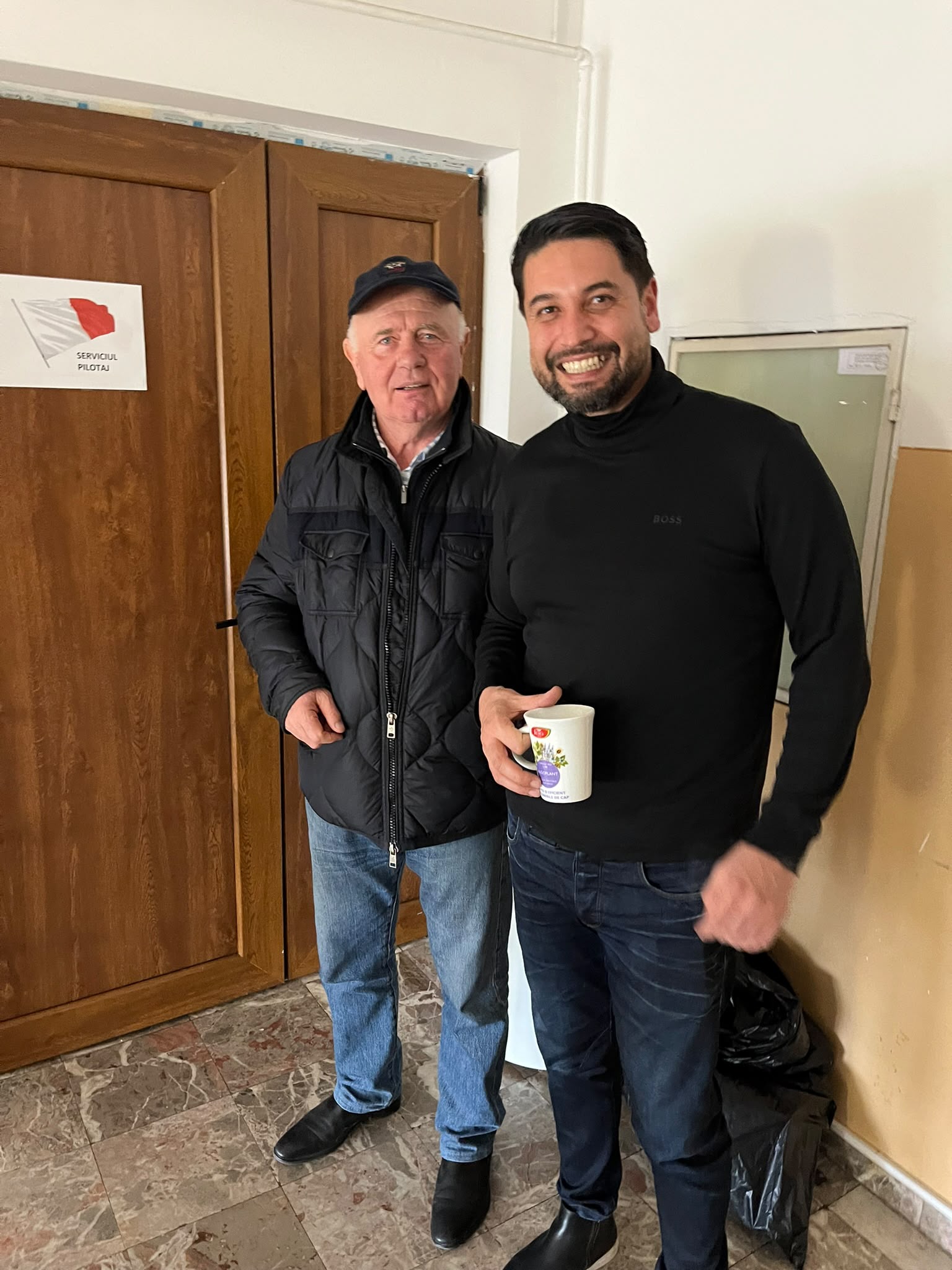
Captain Saricu Gheorghe, Maritime Pilot Class I and pilotage manager, forty-one years of active service and now retired — one of the author’s mentors, on a visit to the pilotage office. · Private Archive
Captain Saricu Gheorghe, Maritime Pilot Class I and pilotage manager, forty-one years of active service and now retired — one of the author’s mentors, on a visit to the pilotage office. · Private Archive
A Clarification on Authority
A clarification, so that nothing here is misread. When I argue for the pilot's authority, I am not questioning the master's ultimate legal command of the vessel. I am defending the professional independence of the pilot's judgement during a live manoeuvre — the principle that tactical decisions cannot be negotiated against administrative criteria formed ashore.Safe speed is the clearest case. During a berthing or an unberthing it is the speed at which the risk of an accident is fully minimised — or, put the other way round, the highest speed from which the vessel can still be stopped at once, using her anchors, the tugs, or her own engines if it comes to that. It can only be judged from the bridge, in the conditions of the moment, and no office-based target can be interposed there.
The same principle governs a pilot transfer. Asking a vessel to make a lee, to alter her heading, or to take up a particular position in the shelter of a breakwater so that a boarding or a disembarkation can be made safely is not an irregularity to be explained afterwards. It is good seamanship — bună practică marinărească — and it should be the ordinary way such a transfer is arranged. A pilot or a boat master who gives that instruction directly to the master is doing the job, and should never have to justify it to anyone watching from ashore.
The argument of this article is that the profession should be structured around physical reality, rested operators and clear visual attention — and that ship handling itself must remain insulated from theoretical models.
Esil Abibula, Maritime Pilot Class I. · Private Archive
Esil Abibula, Maritime Pilot Class I. · Private Archive
* * * * *
This commentary responds to the study “Sustainability Thinking in Maritime Pilotage Training: Barriers, Enablers, Drivers, and Risks” — Issa-Zadeh, S. B.; Garay-Rondero, C. L., Future Transportation 2026, 6, 116, doi.org/10.3390/futuretransp6030116 — and to the discussion it prompted among practitioners.
Esil Abibula is a Maritime Pilot Class I in Constanța, Romania, and formerly headed the pilotage service there for close to three years. He writes these operational analyses in his own time, out of attachment to the profession. The two cases described in section 12 are from his own service; no vessel, port, company or person is identified, and the accounts have been generalised so that the operational lesson stands independently of any local regulation.