Limido Comasco (CO)
Harken Safety & Rescue, the division of Harken Inc. committed to designing and manufacturing products that improve the safety and efficiency of the work environment in which they are applied, presents its new man overboard recovery system. It is a multi-product set designed to improve safety during piloting and working on vessels assisting ships during manoeuvres in harbor waters.
Developed and tested with the Genoa Port Pilots, the system allows the ship's helmsman alone to effectively carry out recovery operations should the pilot fall overboard. The system represents an innovative and complete solution as it is determined by the union of two components: the Personal Floating Link (PFL), which constitutes the connecting element with the man who has fallen overboard, and the Recovery Hardware (RH) composed of several elements that allow the recovery of the operator in an efficient and safe manner.
Let's take a closer look at the two components of this innovative system.
Harken Safety & Rescue, the division of Harken Inc. committed to designing and manufacturing products that improve the safety and efficiency of the work environment in which they are applied, presents its new man overboard recovery system. It is a multi-product set designed to improve safety during piloting and working on vessels assisting ships during manoeuvres in harbor waters.
Developed and tested with the Genoa Port Pilots, the system allows the ship's helmsman alone to effectively carry out recovery operations should the pilot fall overboard. The system represents an innovative and complete solution as it is determined by the union of two components: the Personal Floating Link (PFL), which constitutes the connecting element with the man who has fallen overboard, and the Recovery Hardware (RH) composed of several elements that allow the recovery of the operator in an efficient and safe manner.
Let's take a closer look at the two components of this innovative system.
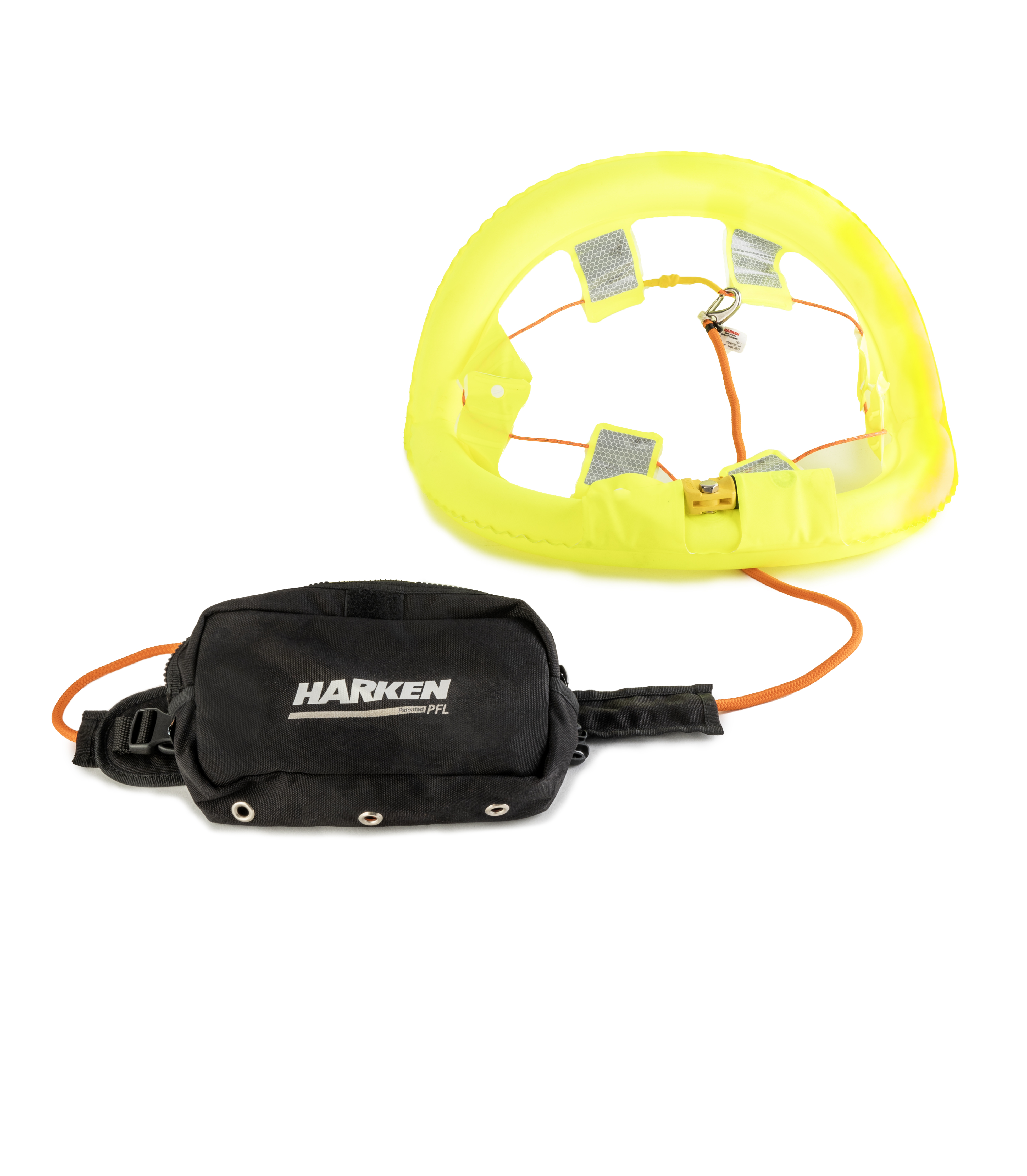
The Personal Floating Link (PFL) is a device designed specifically for pilots, but ideal for all operators working in marine environments at risk of falling into the water. It consists of an inflatable ring connected to a 12-metre floating lanyard, all contained in a practical pouch. The ring inflates automatically on contact with water thanks to a sensor and a CO2 cylinder. The PFL must be installed on lifejackets equipped with a certified anchor point for lifting the person, such as the Solas Spinlock Duro.
The new man overboard recovery system from Harken Safety and Rescue therefore represents a significant advancement in the safety of those working in the marine environment by offering an innovative solution for rescue at sea, as those who contributed to its development state:
Danilo Fabricatore Irace, Chief Pilot of the Port of Genoa:
"Safety and the protection of human life at sea are priorities for pilots. Our collaboration with Harken enabled us to develop a system that guarantees the safe and timely recovery of the pilot in the event of a fall at sea".
Max Delfi, Sales Manager Harken Safety & Rescue:
"We are honored to have developed this innovative system in collaboration with the Genoa Pilot Corps. We are confident that this solution will contribute significantly to the safety of pilot operations".
The product joins Harken Safety & Rescue range designed for the commercial marine line, which includes pulleys, adjustment systems for lifting/pulling operations, winches for load handling, certified anchor points for accidental fall prevention, trolley and rail solutions designed for fall protection and work positioning.
Danilo Fabricatore Irace, Chief Pilot of the Port of Genoa:
"Safety and the protection of human life at sea are priorities for pilots. Our collaboration with Harken enabled us to develop a system that guarantees the safe and timely recovery of the pilot in the event of a fall at sea".
Max Delfi, Sales Manager Harken Safety & Rescue:
"We are honored to have developed this innovative system in collaboration with the Genoa Pilot Corps. We are confident that this solution will contribute significantly to the safety of pilot operations".
The product joins Harken Safety & Rescue range designed for the commercial marine line, which includes pulleys, adjustment systems for lifting/pulling operations, winches for load handling, certified anchor points for accidental fall prevention, trolley and rail solutions designed for fall protection and work positioning.